.svg)
What happens when you breathe
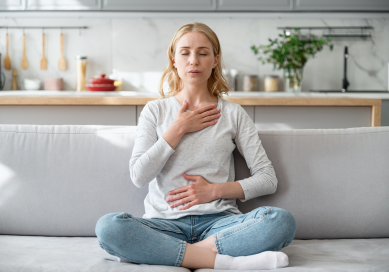
You take thousands of breaths each day without needing to plan any of them. Yet the way you breathe can affect far more than the air moving in and out of your lungs. It influences how your muscles work, how your nervous system responds to stress, and even how comfortable you feel while sitting, walking, exercising, or sleeping.
Breathing is automatic, but it is also adaptable. Your breath naturally becomes quicker during activity and slower during rest. It may become shallow when you are tense, focused on a screen, or curled over a steering wheel. Paying occasional attention to this basic body process can offer useful clues about tension, posture, and everyday well-being.
From air to energy
When you inhale, air travels through your nose or mouth, down your windpipe, and into your lungs. Inside the lungs, oxygen moves into your bloodstream. Your blood carries that oxygen to tissues throughout the body, where cells use it to help produce energy. When you exhale, your body releases carbon dioxide, a waste gas created as cells use energy.
Your diaphragm does much of the physical work. This broad, dome-shaped muscle sits beneath the lungs. As it contracts, it moves downward and creates more room in the chest for the lungs to expand. The ribs also move outward slightly. During a relaxed breath, the belly and lower rib cage may gently rise and fall. On the exhale, the diaphragm relaxes and moves back upward.
Breathing is closely connected to the nervous system, which helps regulate functions you do not have to consciously manage, such as heart rate and digestion. A faster, shallower breathing pattern can occur during stress, pain, or exertion. Slower, comfortable breathing can support the body’s shift toward a calmer state. That does not mean breathing exercises erase stress or replace care for anxiety or other health concerns, but a few unhurried breaths can be a practical way to pause and reset during a demanding day.
Breathing, posture, and movement
Breathing also involves the chest wall, spine, ribs, abdomen, and muscles around the neck and shoulders. If you spend long periods hunched forward, you may notice that taking a full, comfortable breath feels less natural. Tightness around the chest, upper back, or shoulders can encourage the body to recruit extra muscles in the neck to help with breathing, especially when you are stressed or fatigued.
Gentle movement can help. Changing positions regularly, taking a short walk, and allowing your rib cage to move as you breathe are simple ways to avoid feeling locked into one posture. A useful check-in is to sit or stand tall without forcing your shoulders back, relax your jaw, and take several easy breaths. The goal is not to make every breath as deep as possible. Overly forceful breathing can create lightheadedness or discomfort. Aim instead for a smooth, quiet rhythm that feels natural.
Chiropractic care may be part of a broader approach for people dealing with musculoskeletal discomfort, limited mobility, or postural strain. A chiropractor can assess how joints, muscles, and movement patterns may be contributing to discomfort and discuss appropriate options for improving everyday function. Care may include hands-on treatment, mobility guidance, activity recommendations, or referral to another healthcare professional when needed. It is not a substitute for medical evaluation of breathing problems.
New or worsening shortness of breath, chest pain, fainting, blue or gray lips, severe wheezing, or breathing difficulty that does not quickly improve needs prompt medical attention. For everyday tension and posture-related stiffness, however, treating breathing as part of your overall movement routine can be a small, useful form of self-care. Each breath is a reminder that the lungs, muscles, spine, and nervous system are working together—and that regular movement and comfortable posture can help support that teamwork.